Align Your Money
With Your Values


Third Act hosts an interactive on-line learning series on how to prevent bank deposits, credit cards, home/auto insurance premiums, and investments from being used to finance the fossil fuel industry… and instead fund local businesses, community development, and the buildout of renewable energy.
#1 PERSONAL BANKING
If you bank with Chase, Citi, Bank of America, Wells Fargo, TD Bank, U.S. Bank or another mega-bank, some of your money is likely being used to fund companies causing climate destruction. Learn how to find credit unions and community banks that use your deposits to fund local businesses, solar projects and farms, build local housing, and invest in your community... and not fossil fuel projects. Simply put: Shop Local - Eat Local - Bank Local.
How Deposits Fund
Fossil Fuel Companies

This report adds up financial commitments – lending and underwriting of debt and equity issuances – from the world’s 65 biggest banks for the fossil fuel sector as a whole, as well as for companies expanding fossil fuels and companies active in specific sectors.

Stock and Bond Holdings
in Oil & Coal Companies

Some banks - in addition to using depositors' money to make loans to fossil fuel companies - may also hold stocks and bonds in oil, gas and coal. Urgewald's Investing in Climate Chaos reveals whether your bank holds bonds or shares of fossil fuel companies.

#2 CREDIT CARDS
If you have a credit card with Chase, Citi, Bank of America, U.S. Bank (Elan Financial), or Wells Fargo, the transaction fees, annual fees, and interest on debt also feed the money pipeline to finance fossil fuel companies. Learn how to find a credit card that is not linked to one of these mega-banks.
How Credit Cards Fund
Fossil Fuel Companies

Take a look at the front of your credit card. What you’ll likely see is the branding – maybe a bank logo, store brand or nonprofit organization. Now turn your card over and look at the back. What you may find in small print is the issuer of your credit card. That’s who you send your payments to each month.
Sometimes the brander and issuer of the card are the same, but often they are not – and the issuer is who determines whether the fees associated with using the card align with your values.
Those fees include:
Annual fees you pay to use the card (not all credit cards have this).
Interest fees you pay if you carry a balance from month to month (usually quite high).
Transaction fees that merchants pay (usually around 3% of the purchase price).
This means that even if your credit card has no annual fee, and you pay it off in full each month, your purchases are still responsible for transaction fees that go to your credit card issuer.
Find a Responsible
Credit Card Guide

First, check your credit union or community bank - if it issues its own credit card, your quest is over!
If not, you will need to make sure your bank or credit union is not outsourcing its credit card to another institution that disproportionately funds fossil fuels.
ALERT: over 300 credit unions and over 1300 banks have outsourced the issuing and servicing of their credit cards to Elan Financial – which is owned by US Bank, a major lender and investor in fossil fuels.
First National Bank of Omaha issues credit cards for other financial institutions such as Amalgamated Bank. FNBO also issues its own cards. FNBO does not make loans to or have substantial assets invested in the fossil fuel industry.
TCM Bank, a subsidiary of the Independent Community Bankers of America (ICBA), issues credit cards for community banks. TCM does not make loans to or have assets invested in the fossil fuel industry.
America’s Credit Unions and PSCU | COOP Solutions, and CSCU are credit unions associations that issue credit cards for credit unions and are not directly involved in funding fossil fuel companies.
If you do not already have a responsible credit card with the credit union or community bank where you bank, that is where our Responsible Credit Card Guide, developed by Third Act Upstate New York, comes in. This guide lists the best options for obtaining a responsible credit card.
Co-Branded - Affinity Cards

Affinity credit cards are offered by many universities, sports teams, professional associations and others, and increasingly by small and mid-sized nonprofits and membership-based groups that rely on these programs for incremental revenue.
An affinity credit card program may pay the brand owning organization a bonus for each new account generated, plus a percentage of every transaction charged to the card - usually one cent to as little as one-half cent from every dollar you charge.
Affinity cards are issued by a bank or other financial institution and can be used wherever the credit card network (Visa, Mastercard, Amex) is accepted.
ALERT: Many co-branded affinity credit cards are issued by the mega-banks, such as The Nature Conservancy/Bank of America.
The Green America Visa, pictured above, is issued by TCM Bank, which is a subsidiary of the Independent Community Bankers of America (ICBA) and does not make loans to or have assets invested in the fossil fuel industry.
Look for affinity credit cards issued by TCM... or by Synchrony or Bread Financial (formerly Comenity), which do not have significant investments in fossil fuel companies.
Co-Branded - Retail Cards

Retail Cards are co-branded cards that feature the brand of a retailer, colleges, and major league sports teams.
Note: a "co-branded retail credit card" is issued by a bank or other financial institution and can be used wherever the credit card network (like Visa or Mastercard) is accepted, while a "store charge card" is valid only at a specific retailer or brand family.
For example, the Macy's Store Card is a store-only card that can only be used at Macy's. The Macy's American Express Card (issued by Citibank) is a retail credit card that can be used anywhere American Express is accepted.

ALERT: Many co-branded retail credit cards are issued by the mega-banks: Costco Visa/Citi; Amazon Prime Visa/Chase; Target/TD Bank.
Look for retail credit cards issued by First National Bank of Omaha (FNBO)... or by Synchrony or Bread Financial, which do not have significant investments in fossil fuel companies.
#3 PROPERTY INSURANCE
If you insure your home and/or auto with Liberty Mutual, Travelers, All-State, GEICO, State Farm or other major insurance companies, then some of your premium payment is likely being used to both insure and finance the excavation, production and distribution of oil, tar sands, coal and gas. Learn how to find mutual insurance companies that do not insure nor finance fossil fuel projects.
How Your Premiums Fund
Fossil Fuel Companies
Investing in fossil fuel companies: Insurance companies take your premium and invest it in fossil fuels. It’s estimated that insurance companies have more than $536 billion invested in coal, oil, and gas.
Insuring fossil fuel projects: Without insurance, energy companies can’t build or operate destructive fossil fuel projects like pipelines, coal-fired power plants or fracking wells.
Insure Our Future is a campaign holding the insurance industry accountable for its role in the climate crisis... it promotes the rapid shift of the insurance industry away from supporting and financing fossil fuels to accelerating the transition to a clean energy economy.
Find a Climate Smart
Insurance Company

Finding alternatives to the big national insurance companies that are insuring and/or funding fossil fuel companies has not been a simple task because - until now - there has not been a directory to find local and regional mutual insurance companies that are contributing the least possible into the money pipeline to fossil fuels and climate chaos.
This directory is a collaborative project by Green America and Third Act Upstate New York.
This directory, though not comprehensive, contains several suggestions for local and regional home and auto insurance companies in each state.
This directory offers suggestions for which insurance companies to obtain quotes from through an independent insurance agent or directly on-line.
Consider contacting two or three local independent insurance agents, as each agent works with different companies.
#4 INVESTMENTS
Large asset managers - companies that people pay to manage and invest their money - such as BlackRock, Vanguard, State Street, and Capital Group are the among the largest shareholders in fossil fuel companies on behalf of their clients. Learn about the mutual funds you are now investing in and how to find alternative investments... and learn how to find a financial advisor that shares your values.
Which Investments Fund
Fossil Fuel Companies
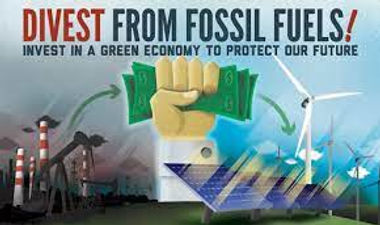
The Green Century Funds and Green America wrote this educational guide to help you determine what is in your investments and align them with your values.
Fossil Free Funds analyzes the fossil fuel exposure of mutual funds and exchange traded funds. They make it easy to know what you own, so you can align your investments with your values.
Find a Financial Advisor
with Aligned Values

Looking for a financial advisor who can help you invest in line with your values? Third Act Members have free access to ValuesAdvisor, a searchable database of vetted financial advisors who specialize in values-aligned investing.

Also find Financial Advisors and Planners who specialize in responsible investing and are members of Green America’s Green Business Network.
Third Act is a non-profit educational, organizing, and advocacy organization. Third Act is not an investment advisor and is legally prohibited from providing investment or financial advice. The information Third Act provides is for educational purposes. Third Act does not offer advisory or brokerage services, nor does it recommend or advise investors to buy or sell particular stocks, securities or other investments. Financial choices are your personal decisions.
PARTNERS & RESOURCES


